

Charter schools are operating in one of the most financially challenging environments in more than a decade. In many communities, enrollment is declining as the impact of declining birth rates is felt and families have more choices. Philanthropy that once helped schools launch, grow, and get through lean years has largely stagnated. Meanwhile, costs for compensation, benefits, facilities, and insurance keep rising, and students are arriving with greater academic and social-emotional needs that require more support. For most schools, costs and student needs are growing faster than revenue.
Charter schools feel this squeeze sharply. Revenue is closely tied to enrollment, often there is reliance on philanthropy to close gaps, and taxing authority that districts can fall back on may not be an option.
In this environment, the ordinary timing mismatches of school finance carry much higher stakes. A state payment or grant arrives later than expected. Enrollment comes in a few seats short on count day. Big one-time purchases like technology, curriculum, or furniture all land in the same summer. When margins are healthy, charter schools can absorb these timing challenges. When the underlying economics are already tight, the same timing issues can push a school into a cash shortfall. So the first question is always what’s driving it: a one-time timing problem that will correct, a structural gap, or both. The answer determines the fix.
There is a fix for this cash crunch
Schools with strong forecasting and financial governance can see a squeeze coming months ahead and act before it becomes a crisis. Schools that rely on the annual budget alone often don’t see it until cash is nearly gone.
Some schools hit a shortfall, resolve it, and move on. Others end up managing liquidity year after year and pay for it with leadership attention that should go to students, teachers, and learning.
The good news is that there’s a realistic way through it all. At Afton, we have developed a seven-step process for resolving a shortfall now and keeping it from coming back next year. Read below for more.
The 7-Step Process at a Glance
Here’s the sequence we recommend for any charter school navigating a cash crisis:
- Quantify the problem.
- Cultivate shared ownership.
- Act on stop-gap moves.
- Assemble the team.
- Address the underlying economics.
- Implement.
- Prevent.
1. Quantify the Problem – Today & Forecasted
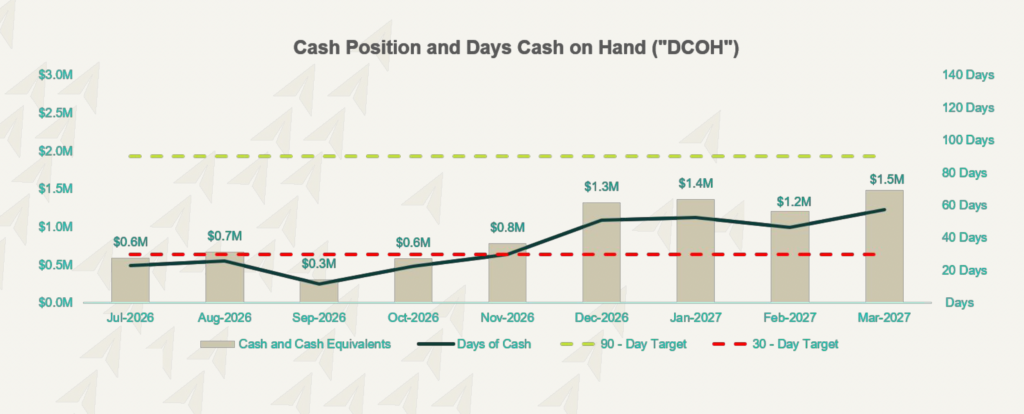
First things first: How much of a crisis is this? How much, by when? Answer that to set your pace of action and weigh trade-offs. Then start answering the following questions:
- What’s our cash position today, in dollars and days cash on hand?
- Is this a one-time timing issue, weak underlying economics, or both?
- What gets us to at least 60 days by year-end, and if not, when? What happens in 12 to 18 months if we don’t act?
2. Cultivate Shared Ownership
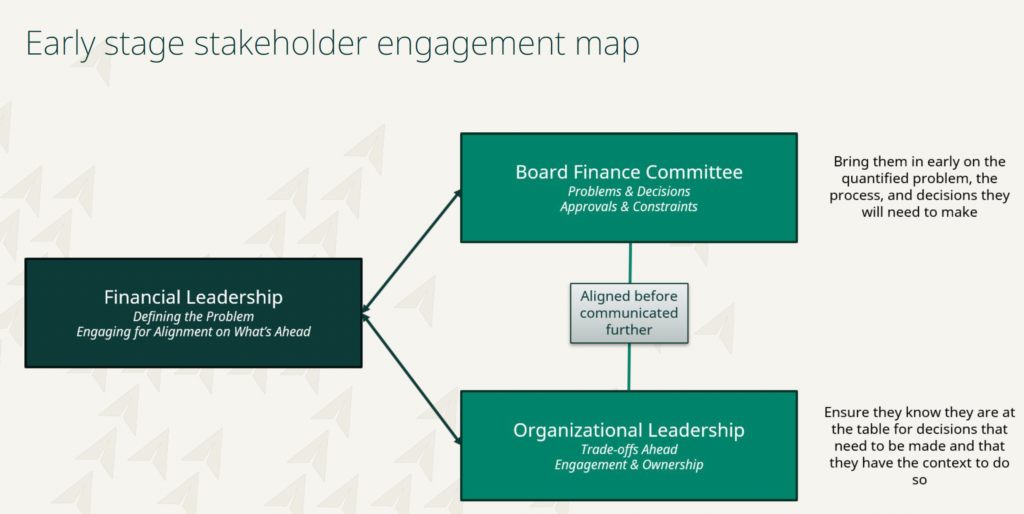
You can’t fix the problem until everyone agrees on it. Assemble an inner circle that you can communicate with often and make decisions quickly, with minimal disruptions.
3. Act on Stop-Gap Financial Moves
Do these to slow the crisis and buy time for structural fixes.
- Secure a line of credit. Establish, renew, or increase it. Do not wait any longer to do this.
- Slow down payables or commitments. Review A/P aging by vendor. Decide what to delay and payment plans. Pause pending contracts, programming, or new positions.
- Speed up receivables. Reach out to grants and philanthropy where you can.
- Update cash flow projections.
4. Assemble the Team
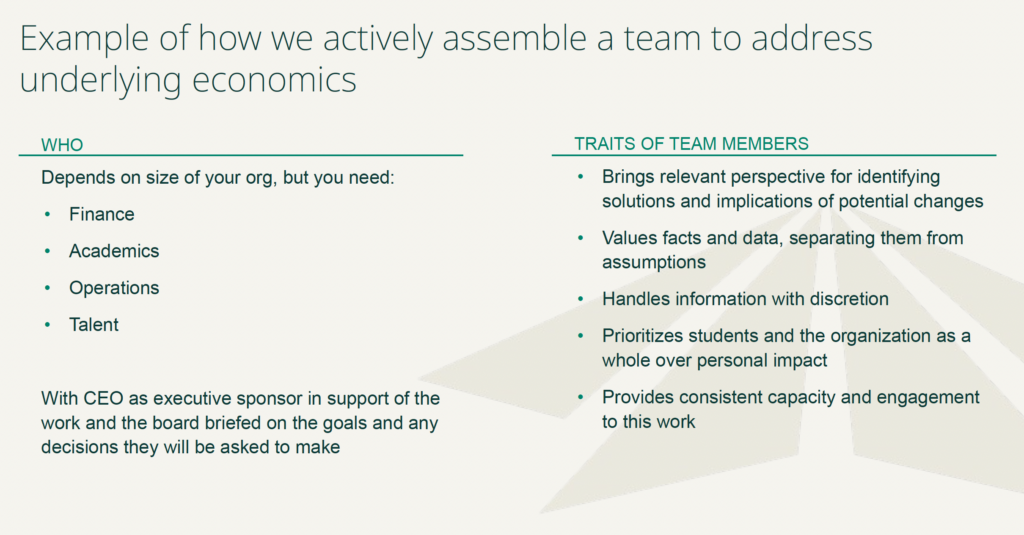
Short term solutions won’t fix underlying issues. Bring in a qualified team to do the work of properly addressing the underlying problems. One team with a “whole org” mindset, comfortable with data, discretion, and consistent engagement.
5. Address the Underlying Economics
Now is the hard part: weighing tradeoffs. What are your non-negotiables? What are your essential criteria or guardrails for decision-making moving forward? Name the sacred programming that’s off the table, or the schools whose performance/accountability status means no changes right now. These are the lines you draw on behalf of your mission, regardless of economics. That being said, revenue and enrollment are two essential factors here too, often where a fix or two might ultimately live.
6. Implement
Easier said than done. But it’s doable. Try to anchor on being informative, transparent, and consistent. Clear roles. Weekly communication. Balance day-to-day ops with necessary strategic changes.
7. Prevent It From Happening Again Next Year
If you don’t pattern-interrupt and fix your practices, it’ll all happen again.
- Start with leadership and governance. Their mindset and practices need to evolve. Build a finance committee with clear guardrails like days-cash.
- Strengthen your budget process with data-driven assumptions around scenario planning and contingency.
- Closely watch leading KPIs like enrollment pacing, cash-flow updates, salary offers vs. budget, and big summertime purchases.
Get Steadier. Stop Scrambling.
None of this is easy. A few obstacles are expected: overly optimistic leadership, vague financial guardrails, lack of in-house bandwidth to do the work. But none of these are a dead end.
A quantified problem gives everyone a shared set of facts. Established non-negotiables let a team move through trade-offs instead of avoiding them. Clear roles let everyone show up fully.
Again – all of this is easier said than done. But it is all doable. The schools who come out of the year more resilient are the ones that follow a sequence instead of scrambling. They treat the process of fixing the acute problem as an opportunity to reestablish the underlying financial foundation.
If you’re in it now, or tired of being back here every year, this is the work we do alongside charter leaders every day.
Review the full slides here.
Related Insights

Three Questions About the FSTC Every State Leader Should Be Working Through Right Now
